At the 2025 Autumn Packaging Expo, the Hot Stamping Foil exhibition area was packed. Beauty brands clutched samples of "Illusionary Gradient Foil" and inquired about the process details. Luxury goods companies vied for exclusive supply rights to "Matte Engraved Foil." Food packagers even held contracts for "biodegradable hot stamping solutions" to compare prices on the spot. The scene resembled the collective excitement before the hot stamping foil industry exploded. According to Smithers' latest report, the global hot stamping foil market is booming at a compound annual growth rate of 8.2%. China, leveraging its industrial chain advantages, accounts for 43% of global production capacity. The key driving this boom lies in the frenzy of niche sectors: In the beauty sector, the hot stamping rate for lipstick packaging will exceed 78% by 2024, with the combination of "embossed hot stamping + UV varnish" delivering a 30% premium. In the luxury goods sector, brands like Hermès and LV purchase over 200 million meters of hot stamping foil annually, embodying the "understated luxury" of gift boxes and leather goods. The food packaging sector is even more dynamic. Following breakthroughs in hot stamping technology for biodegradable base films, the use of hot stamping foil in baking and coffee packaging has increased fivefold in three years.
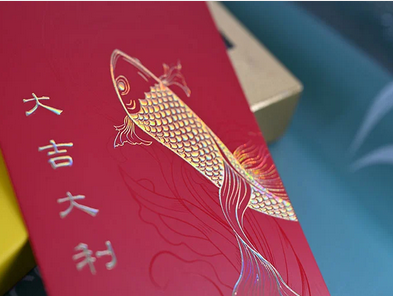
Once reliant on visual impact, hot stamping foil is now undergoing a triple technological revolution: environmental protection, digitalization, and functionalization. It has transformed from a "showy supporting role" to a "must-have" in the industry. The environmental revolution has taken the lead: Traditional solvent-based adhesives are facing new regulations from the EU and China. A leading Jiangsu company has launched a water-based hot-melt hot stamping foil, which reduces VOC emissions by 90% and has already gained access to Unilever's supply chain. A Dongguan manufacturer has developed a bio-based foil with a degradation cycle as short as 180 days, making it a new favorite for food packaging. The digitalization wave is opening up opportunities for small-batch customization. A Zhejiang equipment manufacturer has introduced a "minimum order of 1,000 pieces," addressing the pain points of small and medium-sized brands. Its AI-powered hot stamping system, which iterates patterns within an hour, has slashed the cost of personalized hot stamping for cultural and creative blind boxes and influencer gift boxes by 60%. The company aims to achieve sales of 2 billion meters of digital hot stamping foil by 2025. The combination of functions is even more surprising: the Shanghai Institute of Materials' mass-produced "antibacterial hot stamping foil" boasts a 99.9% antibacterial rating and is primarily targeted at maternal and infant products and medical packaging; while a Shenzhen company's "temperature-sensitive color-changing foil" reveals a hidden logo in response to hand warmth, becoming a truly eye-catching feature for trendy brand packaging.
The battle for market share in the supply chain is heating up. On the upstream raw material side, aluminum foil base film and specialty resins are monopolized by Japan's Toray and Germany's Covestro. Domestic companies Wanshun New Materials and Dingsheng New Materials are working on "ultra-thin, high-toughness base film," with domestic self-sufficiency expected to reach 65% by 2025. On the midstream production side, dual industrial clusters have formed in Dongguan, Guangdong, and Wuxi, Jiangsu. Over ten leading companies, including Zhongli Technology and Guanhao Hi-Tech, monopolize 70% of high-end orders, while small and medium-sized manufacturers rely on "low prices and fast delivery" to capture the long-tail market. On the downstream application side, giants like Hexing Packaging and Yutong Technology are partnering with brand owners to launch integrated "hot stamping + die-cutting + color printing" solutions, transforming hot stamping foil from a "supplementary material" into a "core selling point" for packaging.
In this corporate race, some are betting on technology, while others are obsessed with niche market segments. Zhongli Technology has invested 300 million yuan to build an "AI-driven hot stamping foil factory." The intelligent production line, which is expected to go into operation in 2025, will increase efficiency by 40% and reduce the defective rate to below 0.5%. The company aims to capture a 15% share of the luxury goods market within three years. Even more impressive is a Yiwu workshop with annual revenue of 50 million yuan, specializing in "cross-border e-commerce hot-selling foils," including niche categories like Halloween glow-in-the-dark hot stamping and Christmas glitter foil. Leveraging its flexible supply chain, it handles over 12 million orders annually, achieving a gross profit margin 15% higher than that of larger manufacturers.
Looking ahead to the next five years, the industry consensus points to "differentiated growth": Environmentally friendly, functional foils will monopolize 80% of profits in the high-end market (luxury goods and beauty products), relying on technological advantages. The mass market (food and cultural and creative products) will be mired in cost and delivery constraints, with digitalization and small-batch customization becoming essential for survival. At the policy level, driven by the "dual carbon" initiative, traditional solvent-based hot stamping foil will gradually phase out of mainstream use by 2030. This hot stamping foil industry boom will eventually screen out the real "new ace" players in the triple collision of technology, market and policy.